
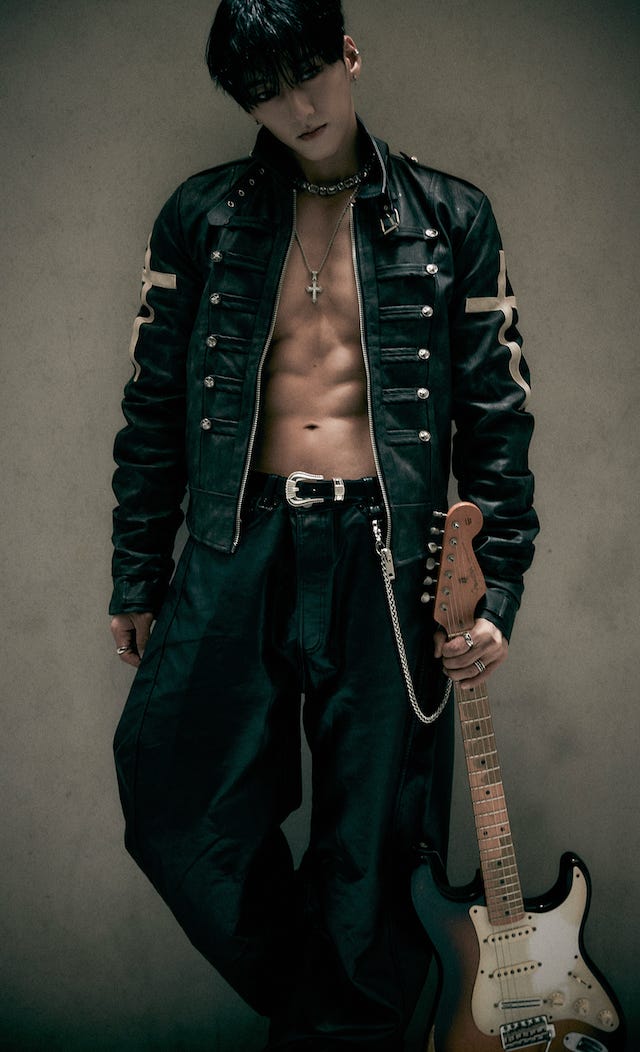
For those who have not heard your music before, how would you describe it to them? How would you finish the sentence “ALL’N is ___” or “ALL’N’s music is ___”?
“ALL’N is violin-driven K-pop.” I sing, rap, dance, produce, and play violin, but I don’t want that to mean every song has to fit one specific genre. Sometimes the violin can be the main character, sometimes it can be supporting the production, and sometimes it might only appear for one really important moment. My goal is to experiment as much as I can while keeping the violin as the thread that makes everything still feel like ALL’N.
Did you develop an interest in playing the violin before or after you became interested in a singing career?
Violin came first by a long time. I started when I was nine years old and originally approached it very seriously, through classical training and competitions. At that point, I wasn’t thinking about becoming a K-pop singer at all. For a long time, I actually treated those two worlds separately, and I eventually realized that made no sense. I had spent so much of my life developing this instrument, so instead of hiding it to fit into K-pop, I decided to build my identity around it.
If you had to give a presentation called “Why the Violin is an Underrated Instrument,” what would be your main arguments?
My biggest argument would be that people underestimate how flexible the violin is. Most people hear the violin and immediately think of classical music, weddings, or something emotional, but it can be aggressive, cinematic, romantic, rhythmic, almost rock-like, and it can work over hip-hop, R&B, electronic, or pop music. I think the instrument has one of the widest emotional ranges of anything you can play. It can sound beautiful and delicate, but it can also cut through an entire production with a lot of power. That is one of the reasons I want to keep experimenting with it in K-pop. I still feel like I’ve only shown a small percentage of what I want to do with it.
What is your personal definition of “contemporary music”?
To me, contemporary music is less about one genre and more about being willing to use whatever sounds, technology, and influences exist right now to communicate an emotion or idea. I don’t really care whether something started in classical music, hip-hop, EDM, rock, or somewhere completely different. If I can take those influences, process them through my own taste, and create something that feels relevant today, I consider that contemporary. That is also how I approach the violin. I don’t want people to hear it and automatically think “classical.” I want them to hear what the instrument can become when it is put inside modern production.
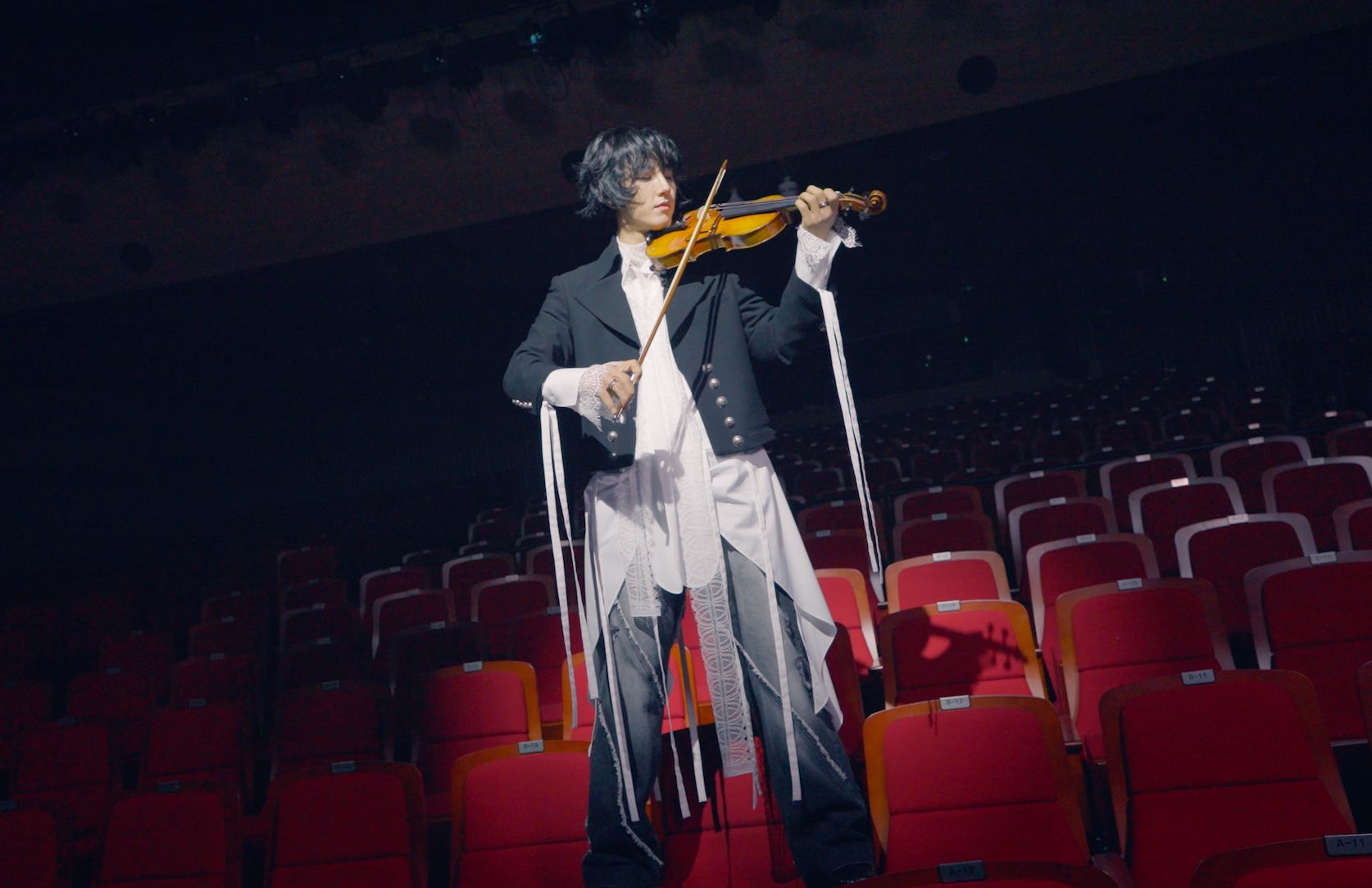
Please describe your newest single, “Dream Higher,” and how it differs from “We Up.”
“Dream Higher” is probably the most personal song I’ve released so far. It is basically a condensed version of the years between having my original K-pop dream, losing that path, rebuilding my life, and finding another way back. The production is much more cinematic and emotional than “We Up,” with electronic elements, electric guitar, heavy drums, and violin. The verses are intentionally more lonely and reflective, and then the chorus opens up into something much bigger.
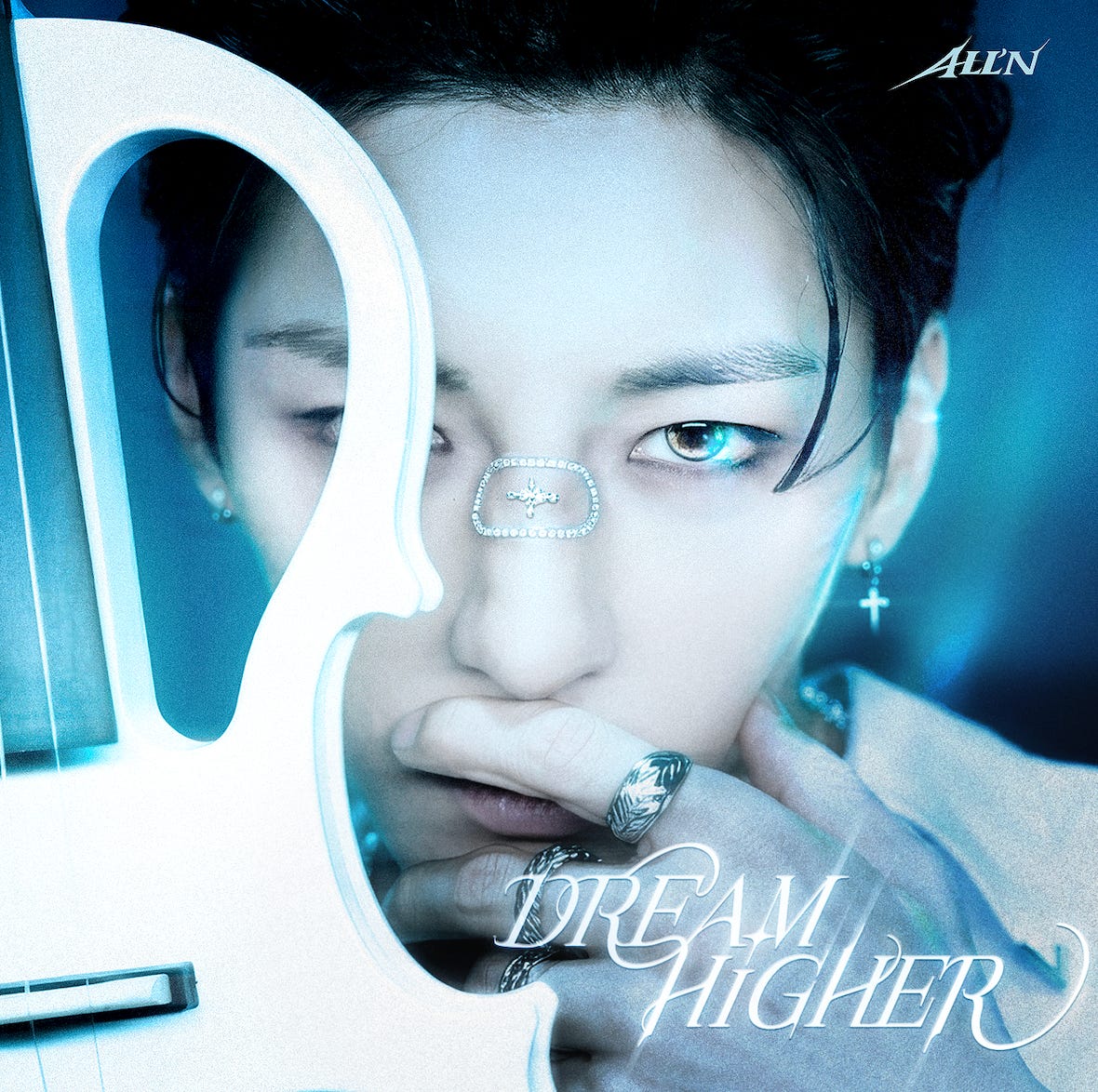
The message is not really “Look at me, I made it.” It is more like “I’m still going.” I wanted people going through their own difficult chapters to remember that where they are today does not necessarily have to be where their story ends.
The biggest similarity [between “Dream Higher” and “We Up”] is obviously the violin, and the fact that both are meant to introduce different parts of who ALL’N is. But emotionally, they are almost opposites. “We Up” was very much a debut statement. It was confident, performance-driven, energetic, and basically my way of saying “The violin K-pop guy is here.” “Dream Higher” takes away a lot of that armor. It is much more personal and explains what actually happened before I got to that debut stage. If “We Up” is the introduction to ALL’N, then “Dream Higher” is more of the explanation of where he came from.
Do you see ALL’N as just an extension of yourself or more of an alter ego?
I think ALL’N is definitely an extension of me. There are parts of myself that naturally become amplified when I’m performing. I’m probably more confident, expressive, and intense on stage than I am sitting at home, but I don’t feel like I’m pretending to be another person. If anything, ALL’N gives me permission to express parts of myself that might be difficult to communicate in normal conversations. The music, violin, performances, and visuals are just different ways of showing those sides of me.
You’ve lived in different parts of the world that have a lot of general differences, but what differences do those parts of the world have specifically when it comes to music?
Living in different countries definitely changed the way I think about music, because every market responds to something slightly different. In Korea, especially within K-pop, there is an incredible emphasis on the complete package. The music matters, but choreography, visuals, styling, content, fandom, and performances all work together. In the U.S., I feel like there is often more freedom for the artist’s individual personality or sound to become the main product. Genres also mix very naturally there.
When I was in China, I saw how enormous entertainment platforms could be and how quickly one television moment or online story could completely change someone’s visibility. I also experienced performing electronic music there, which gave me a very different understanding of crowd energy.
What is interesting is that everywhere I’ve lived, people respond to authenticity and emotion. The language and production style might change, but people can still tell when something feels real.
Can you walk through the thought process that led up to starting your own company?
It wasn’t really one dramatic moment where I woke up and decided to start an entertainment company; it happened gradually. After my original idol path ended, I had a lot of time to think about what I would do differently if I ever got another chance. I had already experienced what it felt like to have very little control over my career, so I knew that if I came back, I wanted to take more responsibility for my own future. During the years when I couldn’t pursue music the way I originally planned, I learned about business, worked, saved money, kept producing, and tried to understand what actually goes into building a career. Eventually, I realized that instead of waiting indefinitely for another company to decide whether I could debut, maybe I could build the infrastructure myself. That idea sounded kind of crazy at first, but it became, “Okay, if I’m actually serious about this, then I need to stop treating it like an idea and make it a real company.” That became SKS Entertainment.
Is there anything you wish you had known in advance before founding a company?
I wish I [had] understood just how many completely unrelated problems you have to solve every day. You might start the morning thinking about a song, and then suddenly you are dealing with a contract, accounting, a music video budget, a distribution issue, a designer, scheduling, marketing, staff, and something you didn’t even know existed the day before. The biggest thing I’ve learned is that having a creative vision is actually the easy part. Executing it requires people, money, systems, communication, and an unbelievable amount of attention to detail.
I also wish I had understood earlier how important it is to protect your energy. When you are both the artist and the CEO, there is technically always something productive you could be doing, so learning when to stop working has probably been harder for me than learning how to work.
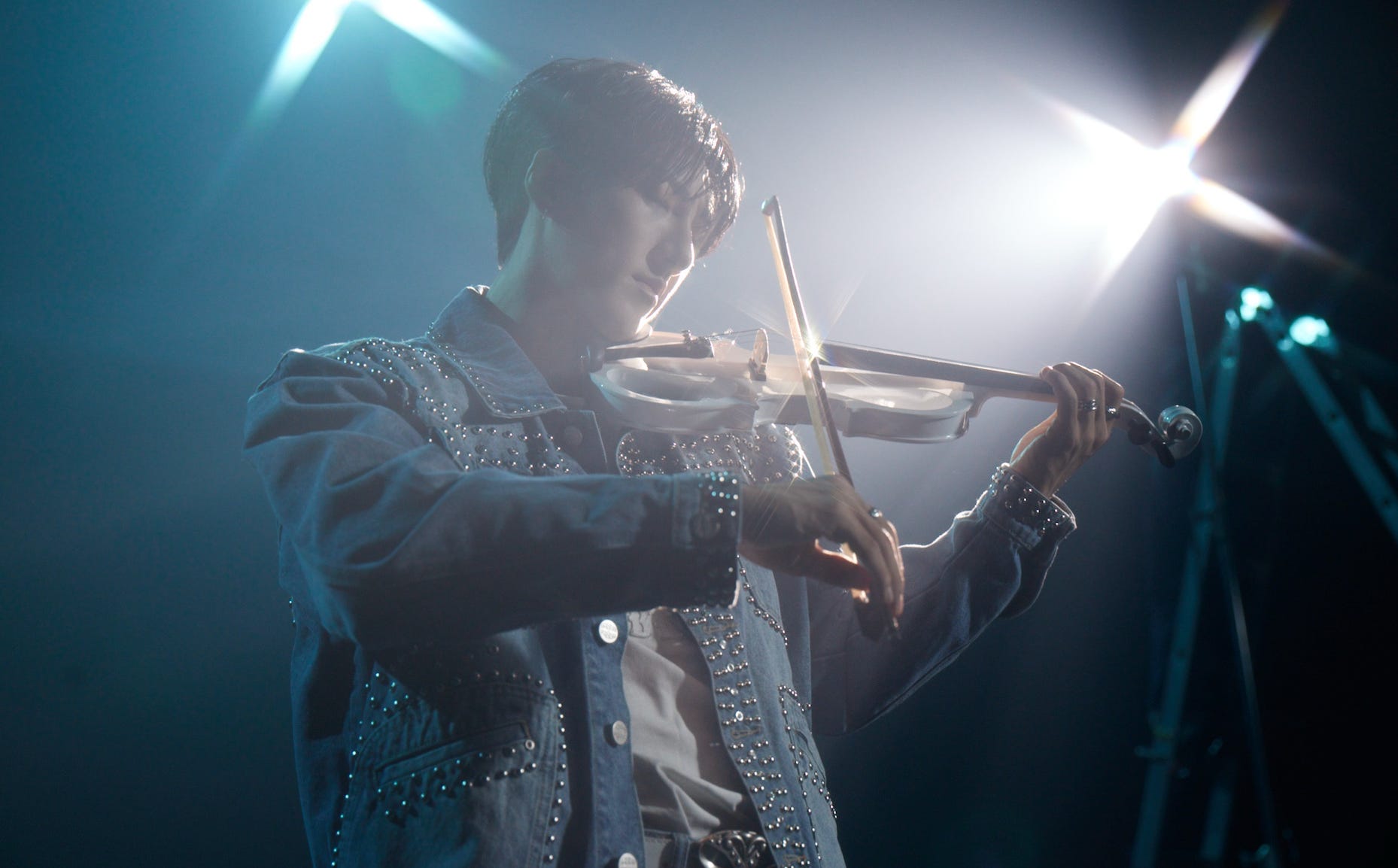
What have the reactions been like from friends and family who have watched your career trajectory?
I think some of them are probably still surprised that I actually did it. They watched me go through a lot of different chapters where the dream looked like it was over. There were years where I wasn’t on television, [I] wasn’t actively promoting as an artist, and there was no obvious reason to believe I would eventually come back and debut in Korea. So when they saw me finally perform on Korean music shows under the company I created, I think it was emotional for them. My family has seen the less-glamorous side of it. They know how much time, money, energy, and uncertainty went into getting here. So I think they are proud, but they also probably worry that I work too much.
You’ve performed on some major K-pop music shows, which is rarer and harder to do for artists who aren’t from the “Big Four” agencies. Was that your experience, that it was a challenge to get booked?
It was definitely one of the more difficult parts of debuting independently. Major entertainment companies already have established teams, relationships, promotional systems, and years of experience navigating music broadcasts. When you are coming in with a new company that nobody knows, you are starting without most of that infrastructure. So getting opportunities to perform on shows like Music Bank and M Countdown meant a tremendous amount to me. I remember walking into those buildings and thinking about how different my situation had looked only a short time earlier. It also made me appreciate how much work happens behind a three-minute television performance: rehearsals, camera blocking, styling, hair and makeup, dancers, staff, transportation, preparation, and so many moving pieces. For me, those stages weren’t just promotional schedules. They were proof that building an alternative path into the industry was actually possible.
What are your short-term and long-term goals, both for your personal career and for SKS Entertainment?
Right now, my biggest priority is building [my] music catalog and making every release better than the previous one. I have another song called “DING” coming next, which is much more playful and tells the real story of how I accidentally met TXT in an elevator during my first week of K-pop promotions. Then I have a much larger project that I’m preparing for later this year. I want people to see that violin-driven K-pop does not mean one specific sound.
Going into 2027, I want to start expanding the live side [of my career] and hopefully perform internationally in the U.S., Europe, Asia, and other markets.
For SKS Entertainment, the long-term vision is much bigger than just managing myself. ALL’N has to succeed first, because that becomes the foundation for everything else, but eventually, I would love SKS to become a company that can give other talented artists and creators opportunities.
Lastly, is there anything else you want to say about yourself or your music?
I think the main thing I want people to know is that this is still extremely early. Sometimes people discover an artist after everything is already polished and established. With me, people are basically watching the building process happen in real time. I’m still learning how to become a better singer, performer, producer, violinist, CEO, editor, and honestly, probably ten other things at the same time. There are going to be mistakes, experiments, songs that sound completely different from each other, and, hopefully, a lot of growth. So if someone is discovering ALL’N for the first time through this interview, welcome. I hope you stay long enough to see where all of this goes.
Check out the single “Dream Higher” here!
Answers have been lightly edited and condensed for clarity. Photos courtesy of SKS Entertainment.